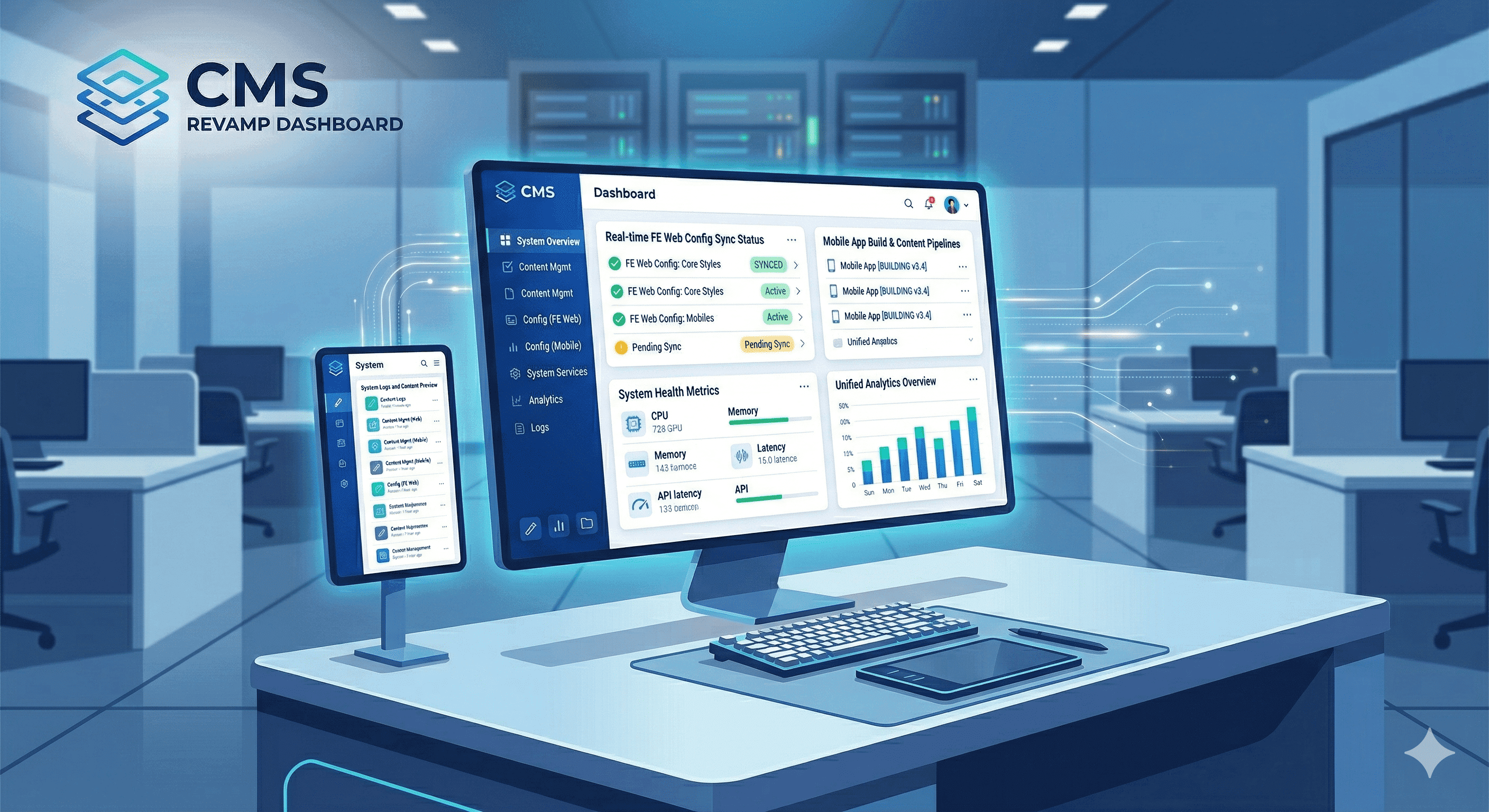
CMS Revamp Dashboard
Technology Stack
CMS Revamp Dashboard
Summary
First implementation of Vue.js in PT Global Unggul Mandiri, a complete R&D initiative and built single-handedly. This CMS Dashboard revolutionized how the company manages content across Website, User App, and Hero App platforms.
Project Impact
Context & Requirements
The company needed a modern, unified content management system to replace the legacy PHP-based admin panels. The existing system was:
- Slow and difficult to maintain
- Required page reloads for every action
- No real-time preview capabilities
- Inconsistent UI across different modules
Business Goals:
- Centralize content management for all platforms
- Enable non-technical staff to manage content
- Reduce time-to-publish from hours to minutes
- Improve data consistency across platforms
Architecture
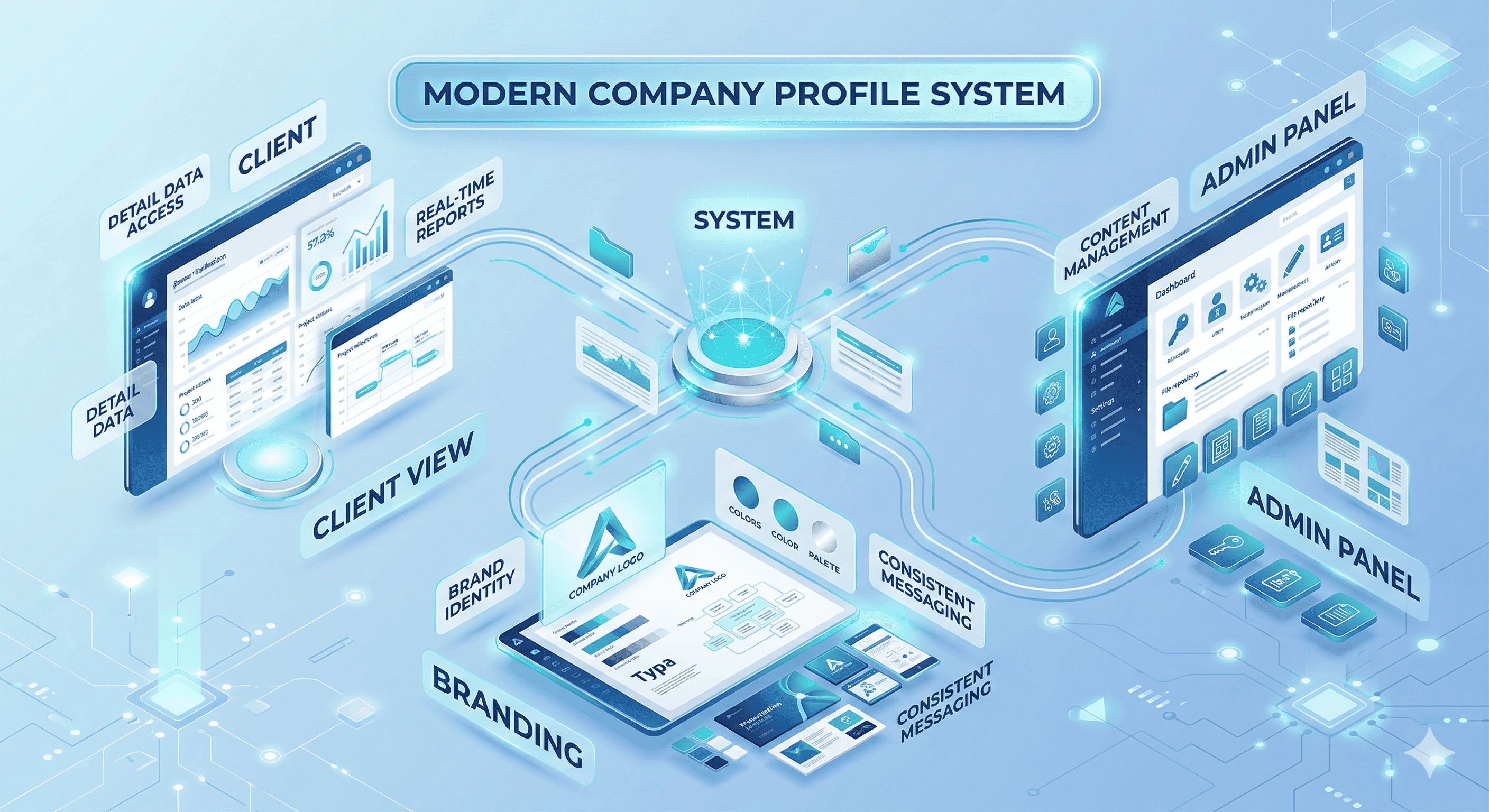
CMS Architecture
Tech Stack:
- Frontend: Vue.js 2, Vuex for state management
- UI Library: Bootstrap for rapid development
- Charts: Chart.js for analytics visualization
- API: RESTful API integration
- Build: Webpack, Babel
Key Decisions & Tradeoffs
Why Vue.js?
| Consideration | Decision | Reasoning |
|---|---|---|
| Learning Curve | Vue.js over React | Gentler learning curve for future team adoption |
| Documentation | Vue.js | Excellent documentation in multiple languages |
| Bundle Size | Vue.js | Smaller initial bundle for better performance |
| State Management | Vuex | Native integration, simpler than Redux |
R&D Approach
This was a pioneering effort - the first Vue.js project in the company. Key decisions:
- Modular Architecture: Built reusable components that could be shared across modules
- Documentation First: Created comprehensive internal docs for knowledge transfer
- Progressive Migration: Designed system to coexist with legacy PHP during transition
Transformed the content management workflow from traditional page-reload forms to a modern, reactive interface with real-time preview capabilities.
Implementation Highlights
1. Real-time Content Preview
Built a live preview system that shows content changes instantly without saving, allowing editors to see exactly how content will appear on each platform.
2. Role-based Access Control
Implemented granular permissions system:
- Super Admin: Full access to all modules
- Content Manager: Create/edit content, no system settings
- Editor: Limited to assigned content categories
3. Multi-platform Configuration
Single interface to manage content that displays differently on:
- Main Website (desktop-first)
- User Mobile App (mobile-optimized)
- Hero App (driver-facing interface)
Results & Metrics
Before vs After
Key Achievements:
- Successfully introduced Vue.js as a standard for future frontend projects
- Reduced content publishing time from hours to minutes
- Created foundation for company-wide Vue.js adoption
- Built comprehensive documentation enabling smooth knowledge transfer
What I Would Improve
With more time and resources, I would:
- Add TypeScript: For better type safety and maintainability
- Implement SSR: Server-side rendering for better SEO on public-facing parts
- GraphQL Integration: More efficient data fetching than REST
- Automated Testing: Comprehensive unit and e2e test coverage
- Design System: Formalized component library with Storybook
Lessons Learned
"Being the sole developer on a pioneering project taught me the importance of documentation and building for maintainability, not just functionality."
This project established Vue.js as the go-to framework at the company and set the foundation for all subsequent frontend projects including PaxelMarket.
Related Projects
Explore more of my work